Showing posts with label What I Teach. Show all posts

Wednesday, January 16, 2019

January Book Club:
The Girl in the Blue Coat by Monica Hesse

January's Junior High book club choice was the historical fiction novel The Girl in the Blue Coat  by Monica Hesse, a missing persons mystery set in Nazi-occupied Amsterdam in 1943.  This was a change from the recent couple of book choices (Geekerella and Let It Snow), which had strong "romance" storylines, and everyone loved it! 

The main character, Hanneke, hates the Nazis for taking over her country, and for the death of her sailer boyfriend.  She's smart, brave and daring, but focuses on protecting and supporting her disabled father and out-of-work mother through a regular job and another on the side procuring and delivering black market goods.  Hanneke doesn't want to know too much about her Jewish neighbors' disappearances; "there's nothing I can do about it," she thinks.   When one of her best customers asks Hanneke to use her procurement skills to find a missing Jewish girl, a series of events brings her close to young people in the Dutch Resistance, and the truth of the Jewish transports.  Hanneke realizes there is something she can do, and throws herself single-mindedly into saving this one girl.  Nothing in the war is as it seems, and among the many many things that Hanneke sees and misunderstands is herself.

I love investigating the history in historical fiction, and put together the information below to create context for our discussions.

Our next few books are: February, The Adoration of Jenna Fox; March, Five Feet Apart; and April, Girls Made of Snow and Glass.


Dutch words

Hanneke - main character (pronounciation)

Mirjam - the missing girl (pronounciation)

gracht - canal

plein - square

Het Parool - The Watchword (underground newspaper of the Resistance)


Map of Amsterdam


Het Rembrandtplein - Rembrandt Square

Jewish Lyceum (where Mirjam, Amalia, and real-life Anne Frank attended school)


Joods Lyceum today (Google Streetview)

Joodse Ster ("Jewish Star") - the Dutch Star of David badge

Related image

Schouwburg theatre during WWII (where Jews were detained before being transported to the camps)
Image result for schouwburg amsterdam wwii

Street where Ollie & Willem live (in the University of Amsterdam area)

Hollandsche Schouwburg today, as a museum and Jewish cultural center

Hollandsche Schouwburg exterieur. Foto Marijke Volkers


Walking route from Schouwburg toward the transport trains in the Eastern Docklands.
The plan is to help Mirjam escape the prisoner group before they reach the Muidergracht bridge.


Plantage Middenlaan - Google Streetview

Anne Frank House - 263 Prinzengracht, Amsterdam (Google streetview)


Plantage Middenlaan over Muidergracht Bridge
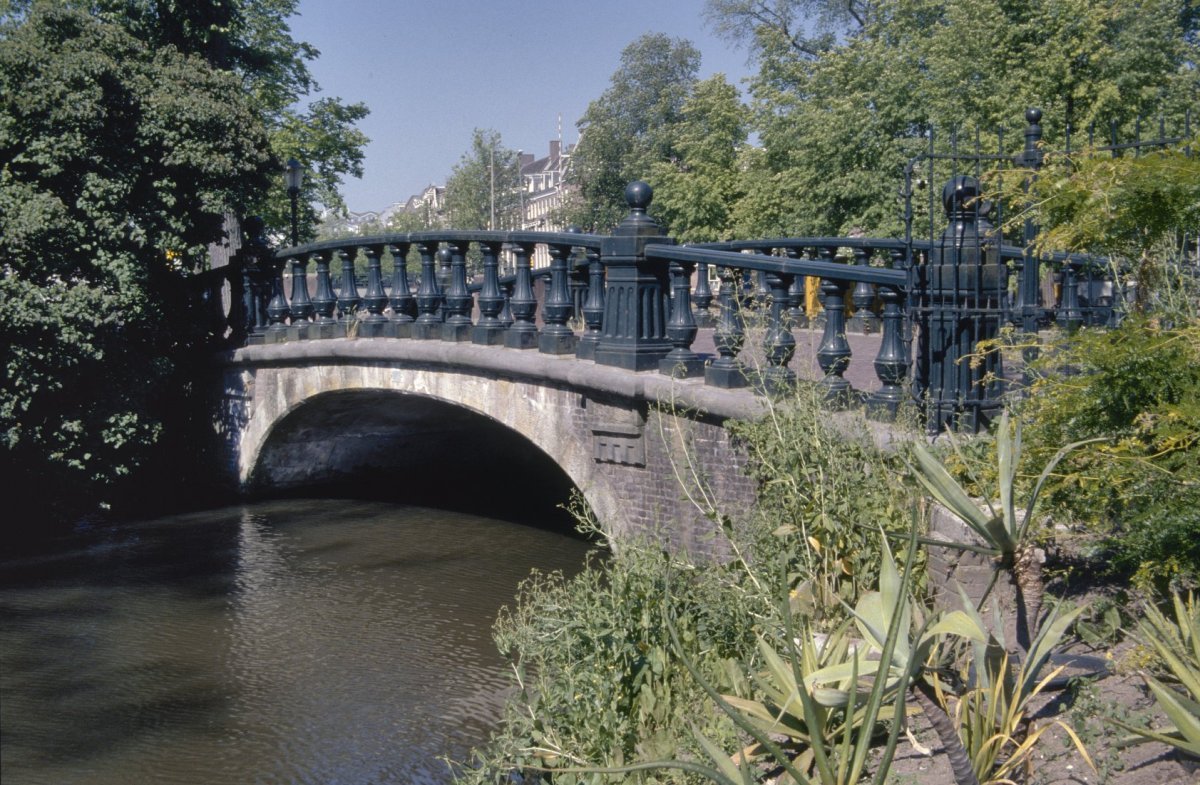
Image result for muidergracht bridge amsterdam


Opklapbed - folding bed (like a "murphy bed" in English)

Image result for dutch antique murphy bed


Amsterdam to Kijkduin

Friday, March 23, 2018

Alumni & Parents -- Do You Read Ebooks??

Dear Paideia Alumni & Parents,

I'd love your input as I decide on how to go forward with Paideia's ebook offerings.  In the comments section below, or by directly emailing me at library@paideiaschool.org, would you help me out by answering these questions?

  1.  do you read digital ebooks (or listen to downloadable audiobooks?)?
  2.  if yes, do you usually borrow or buy?
  3. have you ever borrowed ebooks or audiobooks from Paideia's Axis360 collection?
  4.  do you ever borrow ebooks & audiobooks from your public or university library collection?
  5.  do you know what platform your public library uses? (often it's Overdrive/Libby, but there are others. Currently Paideia uses one called Axis 360.)


Here's why I'm asking

Whether and how the Paideia Library offers digital reading are questions we've wrestled with for years, first with the idea of e-reader devices to check out (in February 2011 -- we never really went there), then with the idea of building a downloadable digital collection, (October 2011 and May 2012) and what the collecting policy should be. Five years ago, we made the leap and launched Paideia's digital collection via Axis360, a platform now part of the Follett Library company.

Right now, Paideia's Axis360 digital collection has just over 500 titles, mostly fiction, almost entirely text ebooks and at the grade 7-12 level.  The guiding policy is to purchase ebooks meant for pleasure reading (as opposed to ones that would be used for research projects, such as Salem Witch Trials, or racial profiling).  There are other variables, imposed by publishing companies, that also influence what goes into our Axis360 collection.  Ebooks (even your Kindle and Audible purchases) aren't actually sold, they're licensed, meaning you are buying permission to use it, without all the rights of ownership (like reselling, or giving it away).   Some publishers only allow 26 checkouts per license, after which a library has to pay for the book all over again. Even worse, other publishers only license a book for 12 or 24 months, whether or not the book is ever checked out in that time!  And then some books are just not even available for the school library collection, period.

Zoom!  Five years later, it's time to re-assess.  Axis360 use is growing, but there are so many new books out that we don't have in that collection.  We haven't added much elementary-level material to the collection at all. Even though there is plenty of information showing that the first wave of enthusiasm for digital reading has lessened, and that readership of print books is rising, we can't just drop the ebooks altogether.  It's 2018, and digital is here to stay.

The thing I love most about offering digital book and audiobook lending from the Paideia Library is that it's 24/7/365!  We do our best to keep families supplied with a generous summer checkout program, but there are still going to be times when there's nothing to read and school is is closed.  Sigh.

Ownership is out, subscriptions are in (think Amazon KindleUnlimited, Spotify, Netflix).  OverDrive, still the largest, most well-known ebook borrowing platform, offers a subscription collection with over 10,000 titles available to our regional independent school membership group.   It's 4 times the annual cost, but 20 times the content, including elementary-appropriate books and audiobooks, and a bunch more stuff (that we may or may not want. We'll see.).

Would more people use Paideia's ebook collection through OverDrive?

If we had more titles available AND used the same app as the local public library systems, would it be more convenient and attractive for Paideia readers?  (ps -- take advantage of your tax dollars; use your public library often!!).  Would a more seamless process for students, staff and families who borrow from their libraries make it easier for the same folks to use Paideia's ebooks?

I think we're going to do it, at least as a test, but before I sign on the line, I'd really like to hear from adult members of the Paideia community about your ebook and audiobook use.  Parents in particular, because you can borrow from our libraries just like your kids can (take advantage of your tuition dollars; borrow from the Paideia Library!!).

Email me at library@paideiaschool.org, or leave a comment below to help me offer the best digital reading options for our community.  Thanks!!

Thursday, November 16, 2017

Junior High Book Club:
Dumplin' by Julie Murphy, and a Visit With "Hannah"!

Go Big or Go Home!

A chance meeting with Paideia alumna Bex Taylor-Klaus in September prompted the choice of Julie Murphy's Dumplin' for our November junior high book club choice.  Bex, who moved to Los Angeles in the middle of 11th grade to pursue an acting career, was in town filming the movie version of Dumplin', and had come by campus with her parents to visit.  With that connection, how could we not read the book?? Plus, it's a pretty awesome book. In the movie (which features superstar Jennifer Anniston as a former beauty queen mom), Bex plays Hannah, one of a crew of unlikely small-town Texas beauty pageant contestants.

Willowdean Dickson's mom calls her "Dumplin'."  A plus-size person herself in back in high school, Will's mom made herself over into a Texas teen pageant queen, and simply can't understand how Will is ok with her own generous and curvy body.  Confused by the inexplicable attention of 2 cute boys, and a newly distant best friend, a rebellious Willowdean decides to show them all by entering the annual Bluebonnet Pageant, along with a crew of other "non-traditional" contestants.  Add in a couple of drag queen style coaches and a Dolly Parton soundtrack, and the Miss Teen Bluebonnet Pageant will never be the same.

Don't you just love the cover art?  A confident Diva in a killer red dress.   

Book club members pretty unanimously loved the novel, though we were split on which boy we wished Willowdean had chosen in the end.  We talked briefly about the book, watched the Julie Murphy "fun facts" video, and OF COURSE had to listen to Dolly Parton sing 'Jolene' (read the book to see why; a Dolly performance from The Porter Wagoner Show is embedded below).

But the highlight of today's meeting was a video visit with Bex, who talked about filming the movie (locations & sets in Marietta and Jonesboro), her co-stars, and how a script has to pare down a 9-hour narrative into a 90-minute movie.  Some subplots had to be let go (bummer) and some characters and scenes were reworked or combined to keep the important points, but lessen the complexity.   Bex also explained how prosthetic teeth turned her gorgeous self into an awkward, bucktoothed misfit.  Hard to imagine, but she showed a photo and a video of herself looking a lot more Freddie Mercury in the teeth department.  Wow.  And, Bex says that Dolly Parton wrote an original song to run with the credits.  A whole new generation of Dolly fans is about to be created!

We can't wait til the movie comes out sometime in 2018.  I think a Book Club field trip will be in order.  Stay tuned for details.

Our December book is going to be Will Grayson Will Grayson, by John Green and David Levithan.

~ ~ ~ ~ ~

Julie Murphy Fun Facts 


Which one is the Real Dolly Parton??


Dolly Partin sings Jolene


Fan art - Willowdean in her work uniform


Coat of Many Colors


Theme Song and Clips from 9 to 5


Friday, August 18, 2017

Eclipse!

I confess to a certain level of clueless-ness. Like, I only clued into the whole eclipse thing about 3 weeks ago, early enough to realize I was already committed to an off-to-college drive that weekend, and to order Eclipse Glasses from Amazon.com, only to have them "recalled," or de-validated, or whatever, a week later.

 But still, the prospect of a total eclipse is super cool. Our school schedule has been adapted, with a delayed end-of-school time on Monday to 1) have kids at school for the event, and 2) avoid whatever craziness might happen on the streets from the beginning to the end (from around 1 to 3:30 pm).

 A history teacher asked for some resources on historical responses to eclipses, and I found some interesting resources on the web. Another teacher, the science/STEAM coordinator who got the dubiously awesome job of "Eclipse Coordinator," was particularly excited by the Halley paper. The same Halley who correctly predicted the arrival of a comet that's now named after him. Ever heard of Halley's Comet (the same one that arrived at Mark Twain's birth in 1835, and came again at his earthly exit in 1910)??

 So here are links to interesting historical solar eclipse observations. Be sure to observe safely!

 Report written by Edmund Halley, who both predicted and observed the eclipse in 1715 (and after whom Halley's Comet is named).

Babylonian eclipse records

Comprehensive list of solar eclipses in history, with first-person observer quotes

Also
https://eclipse2017.nasa.gov/eclipse-history

eclipses in world folklore

 And of course, Wikipedia has a section on historical eclipses
https://en.wikipedia.org/wiki/Solar_eclipse#Historical_eclipses

Here's hoping for clear weather on Monday!

Wednesday, December 14, 2016

Daughter of Smoke and Bone by Laini Taylor:
JH Reading Club


The last reading club meeting of 2016 met yesterday afternoon, to talk about Laini Taylor's Daughter of Smoke and Bone, a 2011 YA fantasy, the first of a trilogy. As usual, it was a small group of four students, but also as usual, all four had read the whole 418-page novel, and had lots to say. 

We were split -- one student proclaimed this her favorite book yet (!!), a second said it was a tie between this one and Afterworlds (October's book), and the other two put Afterworlds on top.  Those readers preferred the complexity of this alternating storylines, and the plots themselves.  None of this group of four were crazy about the romance aspect of Daughter of Smoke and Bone -- as I reread it for yesterday, I realized that I too am so over  the' hot angel boyfriend' trope.  That's my term, but the readers (girls and boys alike) said they were disappointed when the angel showed up and they realized it would be "just another love story."  The character of Akiva is definintely the least interesting.  In this book (I think it gets better in the remainderof the trilogy) he comes off as Edward-like ancient stalker-ish for a long time.

Luckily, there's so much more than hot angels to the story.  The characters of Karou, Brimstone and Zuzana were top topics, and we also talked about the roles of Hope, teeth, wishes and belonging in the novel.  A couple of students were familiar with Emily Dickenson's poem "Hope Is The Thing With Feathers," and we wonderered how that might tie in with Karou (whose name means 'hope' in Chimera) and the images of angel wings and feathers (she wears a feathered mask at the ball).  The legendary mythological nature of the animal/human creatures that are Chimera, and that in Laini Taylor's world they are the sympathetic characters and the Seraphim (angels) are the tyrannical, warlike bad guys.  We talked about Karou's tactic of telling the truth with a smile, so that none of her human friends believed that her outlandish tales were real, and I told them a story I'd read about actor Clark Gable's strategy of introducing his mistress at parties as "my mistress" -- his theory being that no one would believe such a bold statement! 

The collection of fan art below was a lot of fun to talk about.  Karou wasn't so difficult to imagine, but Brimstone was tricky.  Not everyone had imagined him with an animal face.  And Thiago (the guy with the white hair in the bottom row) -- there aren't that many examples of him online (he's a villain) and I explained why I chose that last drawing.  Thiago is a wolf-ish Chimera, described as strong and handsome, yet scary and repulsive.  That's my reaction to that drawing -- technically good-looking, but intensely creepy. And Akiva?  We looked up images online, and there was nothing remarkable at all.  Interesting, no?

Most of the drawings are from the DeviantArt.com artists social network (lots of fan art there!), and it turns out that one of the club members is a "Deviant Artist."  Cool!

We didn't get to watch the author interviews I'd embedded at the bottom of this page.  I forgot to take my own laptop, and the student iPad we used was blocked from YouTube.  Boo.  But I sent the links in an email so everyone can watch later.

This is a fantasy-loving group of readers.  I'm planning for us to read multiple genres (if you're interested in reading club but prefer other genres, let me know!!!), but for January we're still in the "fantastic" realm -- no magic, just cool, weird Steampunk, as we read Fever Crumb by Philip Reeve. Reeve's 2005 novel, Mortal Engines (out of print!!!), is set to be released as a movie next year.  Fever Crumb is a series in its own right, but sets up and takes place in the world that develops into the Hungry Cities of Mortal Engines.


Fan interpretations of Karou, Brimstone, Madrigal & Thiago


For a collection of international edition covers, check out Laini Taylor's blog!


A short interview with author Laini Taylor

Another interview with the author (in a noisy crowded place!)

Friday, October 28, 2016

HS Book Group Goes Trickster with Neil Gaiman's Anansi Boys

Tiny gathering for this afternoon's book club, but when the dedicated gather, interesting discussion happens.  We listened to the NPR Q&A (students hadn't realized that Neil Gaiman is British), and talked about the issues of race, our recollections of Anansi stories from picture books in the elementary library, and the godlike nature of parents. Usually for teenagers,  parents go from godlike to human, and that's when they become seriously irritating. For Fat Charlie, his father goes from a seriously irritating human to a god, and becomes more understandable and helpful.  Hmmm.

The collage below represents 11 years of Anansi Boys cover art, since publication in 2005.  Check out the "retro" cover (click on the image for more info) -- it was 'specially designed for the mass market edition (like old Dashiell Hammet stories) just released this week!  We talked about how it's accurate in the depiction of Mr. Nancy (don't think he ever got a first name) and the beginning of the story, but doesn't really show what the book's about.

1st edition hardback cover
2005

2005 
paperback cover

2008 
paperback cover


International 
paperback
2006 
paperback cover
2016 "Retro" Cover --
Just published this week!


 NPR interview with Neil Gaiman


We also talked a little bit about how Neil Gaiman is white, and he's writing about (and from the point of view of) black characters.  If you've listened to the interview above, you'll know that this is very deliberate on the author's part.   One student commented that the novel is about brothers, girlfriends, parents and folktales, rather than about the experiences of a specifically black man.  Sort of like The Snowy Day is about a little guy in a snowsuit having a great time.  The experience is universal, regardless of the external appearance of the main character.

Next up is The Art of Racing in the Rain -- a regular guy's life as seen by his dog, who's seen it all.


Neil GaimanActor Lenny Henry,
Neil Gaiman's inspiration for Fat Charlie
Lenny Henry in 2006


Greg Changnon's Reading Group Questions
(on ProQuest -- use our database pw or click link at school for access)

Reading Group Questions -- http://www.readingcircle.co.uk/images/pdfs/anansiboys.pdf

Thursday, October 27, 2016

Junior High Reading Club:
Afterworlds by Scott Westerfeld

I am having the best time with Junior High reading club this year!

Since its inception several years ago, I've been the assistant grownup, with homebase teacher (and reading club founder) Greg Changnon taking the lead.  This year, though, Greg has left the homeroom to to write, do special projects (the Author-in-Residence program, coaching the National Championship(!) academic bowl team), and to work with the Alliance Theatre as they bring his play Slur (co-written with his Paideia class) to the professional stage (premiering next week - how exciting is that??! ).  I'm now the official grownup-in-charge, for better or for worse.

Anyway, so far this year, reading club has been very small, with just 4-6 members.  The unexpected and wonderful upside of this is that every single one of these students is excited about the books and has lots to say!  We've met twice this year, and both times everyone had read the whole book and offered insights, frustrations, favorite characters and scenes for discussion.

Our first meeting was at the end of September, and the book was The Rule of Three  by Canadian YA author Eric Walters.  A "what if" survival thriller about modern civilization & society when computers suddenly stopped working (set in utterly suburban Toronto), it got students thinking about everything they use and own that depends on computers.  Yep, those smartphones wouldn't be so smart anymore.  Yikes!

So they read the whole book?  Well, I'd forgotten how long The Rule of 3 is (just over 400 pages), but no one was in the least bit fazed.  When I suggested our October book, Afterworlds, I'd also completely forgotten its length -- 600 pages!  As it turns out, no apologies needed. The club LOVED the book and both of its storylines (the novel alternates chapters between a contemporary teenager working to publish her first YA novel, and the text of her finished book).  We talked for much of the hour about characters, plot, and construction.  Wow.

November will be easy -- we're reading More Happy Than Not by Adam Silvera.  The author will be here at school as the junior high Author-in-Residence, and reading club members will be having lunch with him while he's here.

Another reason why I'm loving these avid readers?  They voted to meet in December, despite the craziness of the end of the semester.  They all wanted a fantasy, and despite warnings of its length (400+ pages), they decided that Daughter of Smoke and Bone was a must-read.

It's an ongoing challenge to find books that this group hasn't yet read but would still like to read.  My rules are 1) YA/teen genre (there's so much good reading that flies under the popular radar, no need to jump to the adult market yet), and 2) in paperback.  So far, so good.  Yes, this is fun stuff!

Below are four short videos we watched toward the end of yesterday's meeting, to spur thought and even more discussion.

~ ~ ~

Scott Westerfeld talks about his book


"Where I get my ideas."


Official Publisher Book Trailer


Not how our group envisioned the characters.


A Reader Review and Analysis


"Westerfeld takes self-referential to new heights!"


Reverse Psychology!!!


So duh, of course "Standerson" is John Green.  Too funny!


Saturday, January 23, 2016

#1Lib1Ref, Wikipedia and Me


I love Wikipedia.  For a long time librarians were supposed to ban the online user-edited encyclopedia (maybe we still are), but man, it's just too useful.  What we have to teach our students is that, just as with all tertiary sources, researchers have to move beyond the encyclopedia's text, mine it for clues and get closer to the primary source of the information.  Just as with revenge, Wikipedia is a great place to start, but not a place to stay.

Ok, so I love Wikipedia, and here's an example of why.  At the beginning of this January short term, Catharine came in looking for books of Greek mythology.  Her class was reading Yeats' sonnet "Leda and the Swan," and Catharine wanted to find an "original" version of the myth to add to the discussion.  We headed over to the 200s "religion" area on the shelf and checked book after book in vain. The few that mentioned Leda didn't tell the story at all.  Ovid's two lines also weren't satisfactory.

As so often I do when I need context and clues for a search, I checked into good ol' Wikipedia, which has a substantial article on "Leda and the Swan," but it's all about depictions of the myth in art and poetry.  The article mentions "many versions of the story," but didn't point to any of them. I scanned the whole article, but no luck.  No links, no pointers to any actual sources for the myth. Aargh.

At the end of the second paragraph, though, the sentence "Thanks to the literary renditions of Ovid and Fulgentius it was a well-known myth through the Middle Ages . . ." held the clue I needed!  I did a web search for Fulgentius and Leda, and came up with Fulgentius the Mythographer, a 1971 translation from Latin with citations and commentary, of the five known works of Fulgentius, and on page 78 begins "The Fable of the Swan and Leda."  A couple of screenshots later (we librarians have our ways to get the info to our people), and I get to present Catharine with what she'd come for.  Yippee!!

About a week later, I heard about Wikipedia's 15th Anniversary project #1Lib1Ref, which is asking librarians around the world to add one reference, a citation to a reliable source, that backs up a statement in any Wikipedia article.  Participating was a no-brainer -- I already had the goods! So as of right now, the 3rd footnote in the article (near the end of that second paragraph) is the addition of yours truly.  And a link to another source, attributed to Latin writer Hyginus, in the External Links section.  Cool, huh?

 Are you a Wikipedia fan or a skeptic?   Have you ever edited a Wikipedia article?  What do you think of the #1Lib1Ref project?  Comments welcome!

Friday, January 8, 2016

Clean Sweep 2015:
Dorothy Allison at Paideia in October

Gosh, it's just become 2016, and there are a bunch of things I meant to write about way back in 2015 that never made it to the blog. Do you ever get paralyzed by having too much going on in your head at the same time, so nothing ever makes its way out?  Kind of like a logjam in timber territory.

So here we go -- making a clean sweep of 2015, and onward with 2016!

==========

Back in October, acclaimed author Dorothy Allison spent time with classes, and gave two talks in the theater (a morning talk/reading at a student assembly, and an evening reading for the public).   My notes are something like this:
- a compelling speaker,  teenagers actually paid attention for an hour.  Many (including me) were leaning forward to catch every word.
- she definitely goes for shock value; topics & vocabulary not used in public often (even at Paideia!!)
- Allison spoke directly to the students (flattery ;-)
- she's very funny
If Dorothy Allison wrote poetry, she'd be a slam champion!  The roots of her writing are definitely in storytelling and performance, which comes through brilliantly when she's on stage.  I went to elementary and junior high school in northeast Alabama, and felt as though Allison could have been one of the girls I went to school with -- maybe my best friend, maybe an academic competitior, maybe (in honesty) one of the girls the others talked mean about.  Somebody I knew.  Whatever it is, she is able to really connect with her audience. Oh, and she's got a killer smile!

There were significant differences between morning and evening talks:
• in the morning she kept coming back to the idea that "all writing is about revenge"
• in the evening the theme was more about "grace & glory," growth and acceptance

I mention this because it came up later in the week when we met with our advisee groups to discuss Allison's visit.  My tiny group of four 9th graders met with Magnus' larger group for better discussion dynamics.  We started with sharing reactions to the assembly -- the "shock value" was definitely noticed -- and discussed the value of talking about stressful events.  Does writing or talking about such events cause greater stress by re-living it over and over, or does it release stress by processing and controlling it?   A couple of students got stuck on the notions of anger and revenge and had negative reactions to the author, so I was glad I'd attended both and could talk about the wider, gentler themes of the evening talk.

So what did Allison mean by "revenge is a good place to start, but not a place to stay?"  In her introduction to the anniversary edition of her short story collection Trash, Allison writes that sometimes she wrote for revenge, sometimes out of rage, sometimes to refute other authors' stories of ignorant poor Southerners, of stupid, morally deficient white trash -- but also that "I grew up [while] writing these stories. I made peace with my family. I forgave myself and some of the people I had held in such contempt . . . in large part through the writing of these stories."

We talked about writing prompts & catalysts,  then moved to personal writing, writing for an audience.  Teenagers write ALL the time, for all kinds of audiences -- Facebook, Instagram captions, Twitter, lit papers,  test essays.   Do they think of who's likely to be reading their words while they're transmitting what's in their heads into a public statement?  Should they?

We have these Dorothy Allison books (2 novels and the short story collection) in the Paideia Library.


The morning after Dorothy Allison's visit to Paideia, an 11th grader, slightly out of breath, came into the library before school to check out Bastard Out of Carolina.  "Are they all gone?  Is there a copy left?" she asked.   She'd spent 3 hours listening to Allison the day before -- in her lit class where the author spoke just to her class, then in the high school assembly, and then in the junior/senior gathering with the author after the all-school event.  The student was blown away.  Me too.

Friday, December 19, 2014

Amnesty in the Library (It's Not What You Might Be Thinking)


What's wrong with this picture of students studying in the library for finals?  Oh my goodness, they're blatantly eating lunch in the library! Yep, that's what going on.

Normally, no food or drink (except water) is allowed in the library at any time.  If you've ever seen the high school commons after lunch (it's a gross trashy disaster), you'll understand why.  Usually I take the offending items to my office for pickup on the way out (with assurance that I won't taste anything), but repeat offenders are requested to leave, immediately (alumni, you know who you are!).  Most of the time, the student can come back the next day (or next week) to try again, but ever so rarely a student gets asked to leave, permanently, for the rest of the year.  Sigh.

So what's going on this week?  Long term finals, with the attendant anxiety and stress, and morning snacks provided by our awesome high school parents.  Last year, rather than continuing to police and enforce the "no food" policy, I decided to offer a Food Amnesty for the three days of finals at the end of each long term. 


So far, so good.  Students seem to appreciate the luxury of snacks while studying, and as long as I walk around right before the final reminding everyone to "Leave No Trace -- even if you HATE the person who left trash behind (do you want that person to ruin it for everyone???)", the place is left in pretty good shape.  It's an ecumenical holiday gift!

And the library is packed with studiers every morning before the first final, and during the entire lunch period.


I have my stack of vacation reading all ready.  Do you?  Enjoy the next 2 1/2 weeks!

 с новым годом!!

Happy New Year!